
 Easy
Easy Route 2 Railways with history - Chinchón
Chinchón, Comunidad de MadridRoute 2 Railways with history - Chinchón
Chinchón · Comunidad de Madrid 37.7km Distance
2h 30min Duration
789m Max altitude
e-Bike Type
Easy Chinchón and Colmenar de Oreja are two towns with a significant historical and cultural content in The Madrid Las Vegas, in the last three centuries they have been important commercial centers and were connected to the capital by railway. Colmenar de Oreja was the most industrial town in the province of Madrid until the mid-20th century, the stone from the local quarries was highly valued in construction and had one of the largest productions of wine jars, remnants of several ovens are still scattered throughout the urban area.
The route departs from Chinchón along the old path of the “stone train”, the popular Arrancacepas built in the early 20th century between the main line that traversed the Tajuña valley and Colmenar de Oreja. On the ascent from Morata de Tajuña to Chinchón, the train climbed so slowly that passengers had time to get on and off while in motion to “pull” some bunches of grapes from the vineyards along the way. The first stretch is a delightful rural plain for biking, following the bike lane set up on the old railway track until the entrance of Colmenar de Oreja. The route continues through the historic center and visits the Plaza Mayor, which preserves the atmosphere of the best Castilian public squares and several terraces for refreshments.
The route leaves Colmenar de Oreja via the Paseo del Cristo, passes by the Santuario del Cristo del Humilladero and arrives at Belmonte del Tajo through the pillars of the Parque de las Fuentes, built in the late 19th century from limestone from the Colmenar quarries. At the Fuente de Arriba, water flows from four bronze spouts, featuring a rectangular trough and a pond with a wash area.
Warning: shared space with motor vehicles.
Types of path:
Mapa interactivo proporcionado por
Wikiloc open_in_newMoments captured by our community.
Discover unique places to stop and enjoy.
 water_drop Agua
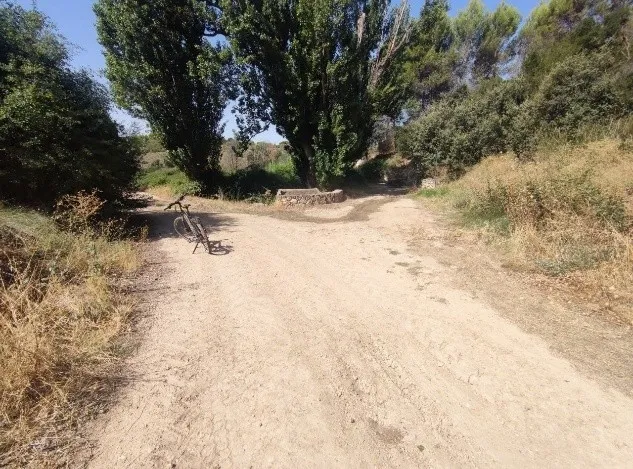
 The spring of the Fuente de la Tejera emerges in a transitional landscape between the clayey mountains of the páramo de la Tejera and the gardens and crops of Belmonte de Tajo. The pond occupies an artificial basin among some enormous poplars, and the spout of the fountain is hidden next to one of the giant trunks. The site is a reserve for amphibians and acts as a biological indicator of wetland ecosystems in the agricultural plains. The route descends through the valley of the stream of la Tejera towards the town of Belmonte de Tajo.
 place Otro
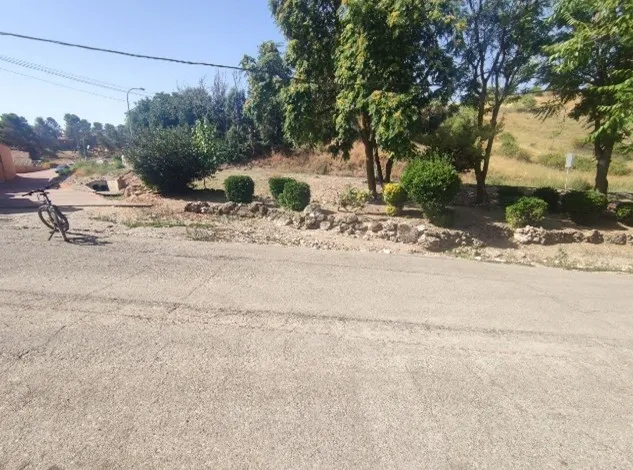
 The cycling route passes by the pillars of the Upper and Lower fountains, built in the 19th century with limestone masonry from the quarries of Colmenar de Oreja. At the Upper Fountain, water flows from four bronze spouts, it has a rectangular trough and a pond with a wash area. The Constitution Square is a beautiful urban space, it has bullfighting airs and an architectural typology of a festive Castilian market, with porticoes on the facade of the Town Hall and the presence of the Renaissance church of Our Lady of the Star, from the 16th century.
 place Otro
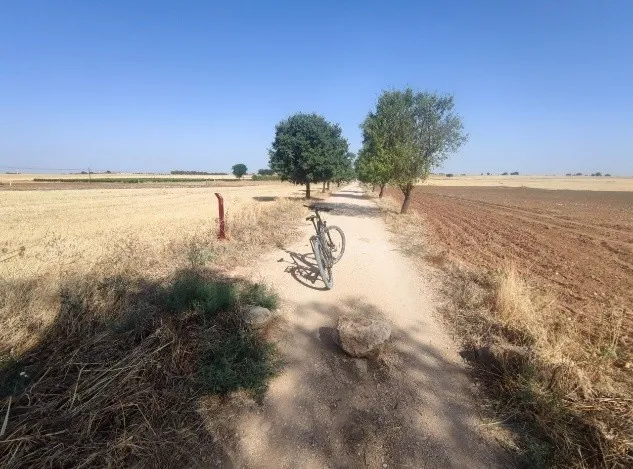
 The popular Colmenar train or "grape puller" was built in the late 19th century to transport agricultural products from the alcarrias of Chinchón and Colmenar de Oreja, including limestone and the famous wine jugs, the star product of the local artisan industry. The nickname of the railway is due to the numerous grapevines that had to be uprooted to build the track; other sources say that the speed was so slow during the ascent that there was time to get on and off the moving train and uproot some grapevines along the way.
 castle Edificio
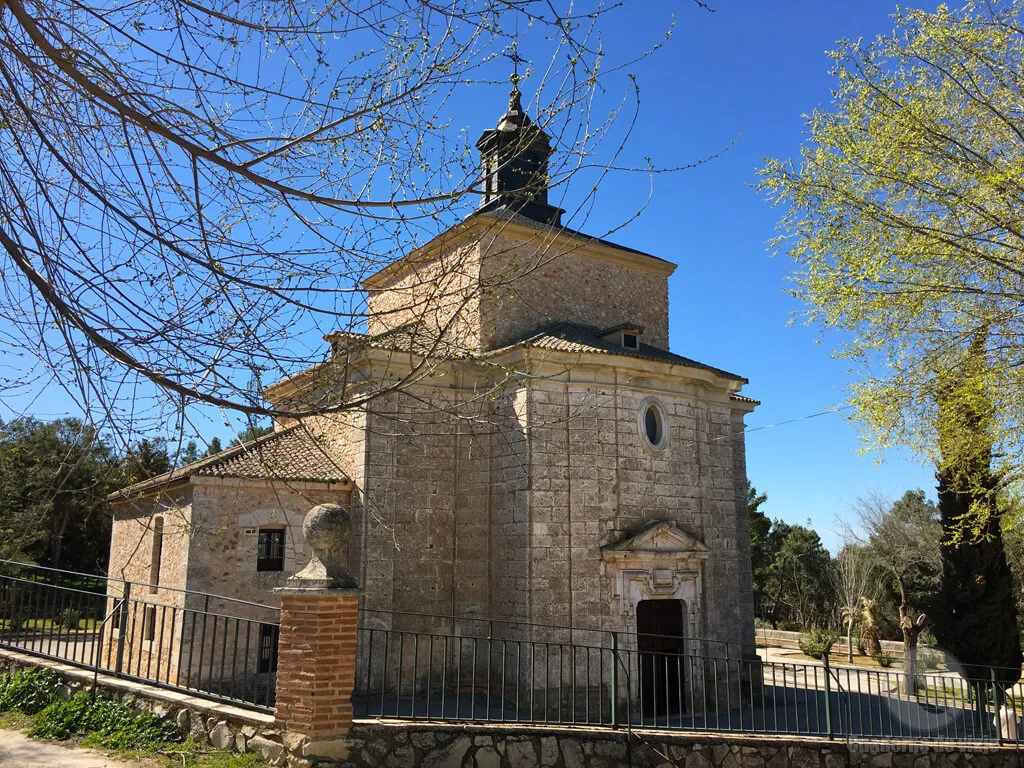
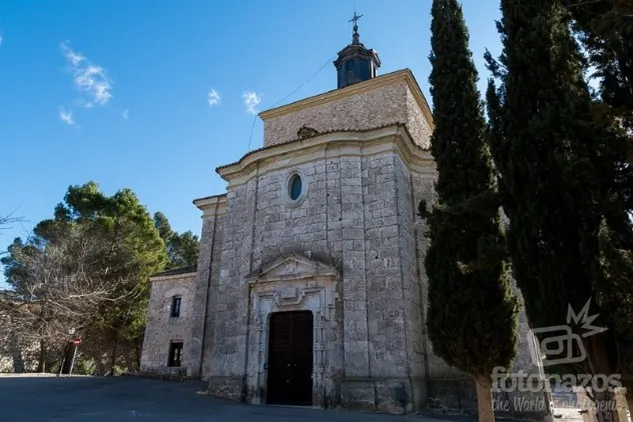
 Its construction dates back to the 16th century and consists of two chapels, one from the mentioned century with a small chapel in the shape of a Latin cross with a beautiful vault that initially housed the image of Christ and that currently houses the image of the Virgin of the Pillar. In the other, in Baroque style from the 17th century, is the one that holds the replica of the carving of Christ of the Humilladero since the original, gifted by the Pope to Bernardino Cárdenas in gratitude for his participation in the Battle of Lepanto, was destroyed during the Civil War. The altar and the altarpiece are the work of the sculptor Julio Vicent from the year 1940.
From the gardens surrounding the hermitage, the panoramic view of the village is unique.