


Turicleta
Molinicos
Featured Destination

Molinicos

Albacete
Cómo llegar

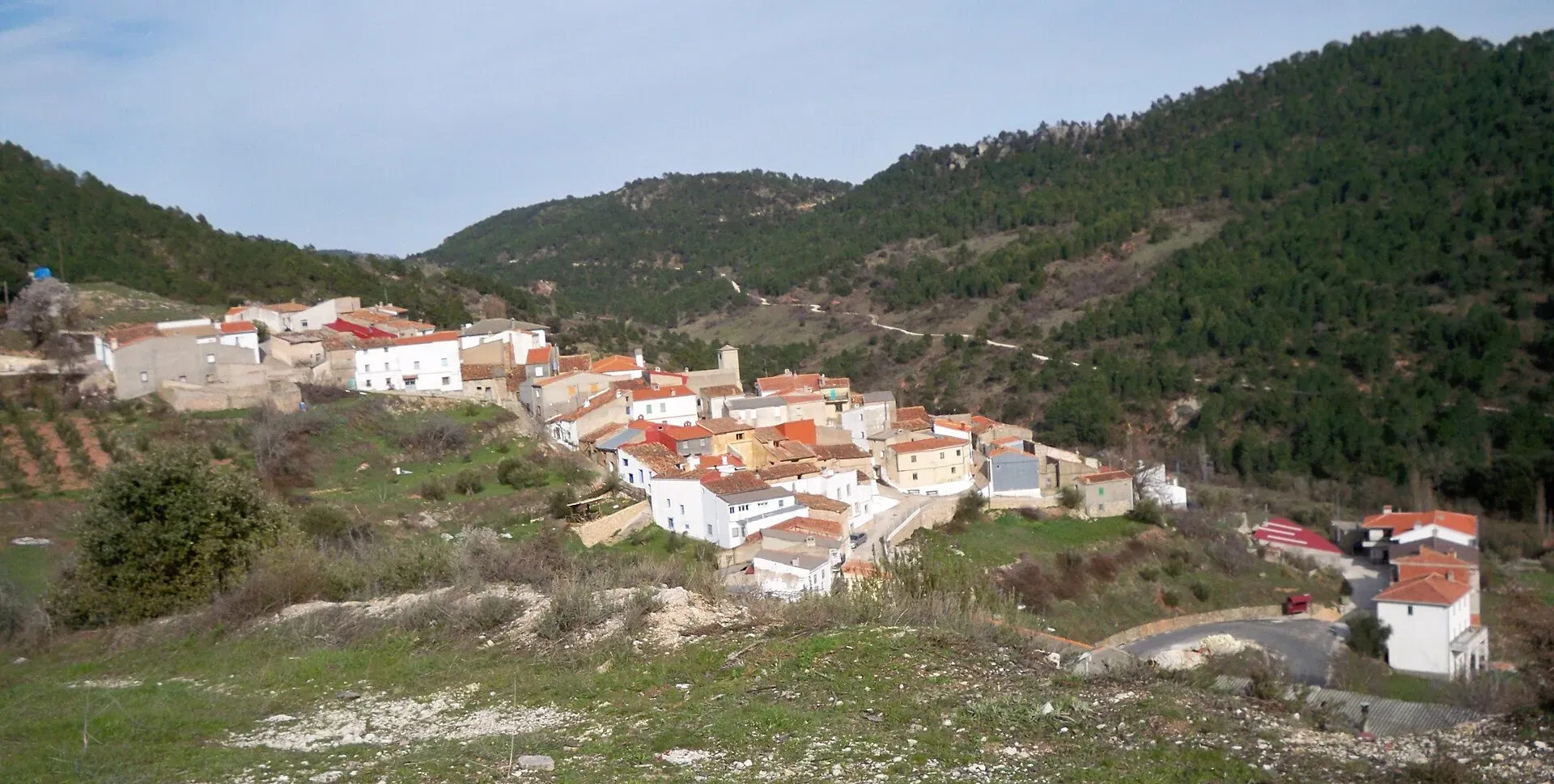
Oriented to receive the first lights of the day, the population of Molinicos clings to the slope that sustains it in a magnificent display of architectural balance. Its municipal term offers the possibility of visiting places of singular natural beauty and villages that still preserve their original character of mountain constructions.

6 Cycling Routes
1 station available
Where do you want to rent your bike?

Stations inMolinicos

Find electric bike stations available in the city.

View all

Sobre Molinicos

<p><strong>Heritage</strong></p>

Molinicos is located in the flow and confluence of the valley formed by 2 streams, the arroyo del Pardal and the arroyo de Fuente-Higuera.

This makes its urban center a framework of steep and narrow streets that seem not to want to detach themselves from that pleasant and peaceful mountain atmosphere.

Crowned on its southeast slope by the peña Perico, an emblematic rock for the inhabitants of the town, the old town of Molinicos develops at the confluence of the two streams in two main areas: one high and the other low, separated by a spectacular ravine.

In both areas, several molinos (mills) were built that took advantage of the flow of the streams to work.

The municipal term is composed of, in addition to Molinicos itself, its villages, some already uninhabited, and also groups of farmhouses and scattered hamlets: Los Alejos, Alfera, Las Ánimas, Cañada Morote, Cañada Provencio, Los Collados, Fuente-Higuera, Las Hoyas, Mesones, El Pardal, Pinilla, Torre-Pedro, Vegallera, El Morcillar, Las Huertas…

Molinicos does not manifest its urban reality to the outside; it takes advantage of its unique topography to hide in a valley.

Historical events, the physical environment, and the main activities of the town conditioned the housing and the layout.

This is organized into three parallel longitudinal axes that converge with stairs or streets and give it a labyrinthine appearance.

Two types of architecture can be highlighted:

The baja (lower) part of the town, older, with constructions prior to the 60s. The facades form large whitewashed canvases, with black grilles, lintelled wooden doors with large courtyards and corrals standing out against them, which are part of the dwelling, where animals such as hens or chickens can sometimes be found, recalling the activity proper to each family.

This part of the town is located around the arroyo (stream), which justifies the presence of mills attached to the houses.

It is worth noting that this part is inhabited by the oldest population.

The alta (upper) or superior part, with a majority of young people, poses aesthetic problems.

Lime is abandoned and replaced by more modern materials, aiming for a more current urban appearance.

Nevertheless, this area possesses charms derived from its topography.

It is rare to find single-story houses, as the terrain is very broken, and vertical development is utilized.

The structure then responds to a stepped construction with the curiosity of being able to access a dwelling through two different floors, from two streets located at different heights.

<p><strong> Fauna and Flora <p><strong>

In the Cañada del Provencio, we find the Pino Toril. Its common name is pino laricio, negral o salgareño.

It is immersed in a dense pine forest formation, with abundant shrubby vegetation.

Height: 24 m. Width: 27 m. Surface area: 572 m².

It presents thick branches arranged in multiple directions; in the lower part, remains of branches that were felled can be seen.

Its state of conservation is bueno (good), although it has some dry lower branches.

It belongs to the Ayuntamiento (City Council).

Within the Mediterranean floral domain, Molinicos presents a particular and evolutionary flora structure.

There are two types of vegetation: deteriorated vegetation and forest masses.

Alterations to the plant structure are evident around the urban centers.

It suffers the influence of human clearing for the use of firewood, pastures, and livestock, evolving into a scrubland surface with a predominance of thyme.

Large forest masses exist with the absolute preponderance of the Pinus pinaster, found in very cold shaded or sunny areas.

This area is particularly rich in plantas aromáticas y medicinales (aromatic and medicinal plants);

we can also find marjoram, chamomile, pennyroyal, and winter savory, with rosemary being the most predominant.

On many slopes, the large amount of land that was once dedicated to the cultivation of esparto grass can be seen.

Currently, the most cultivated tree species are the almendro (almond tree) and the olivo (olive tree).

It is also frequent to observe walnut trees and, in mountain areas, among the pines and holm oaks.

Regarding fauna, Molinicos has a great abundance of wild animals.

The habitat of large animal species is conditioned by the plant structure.

Around urban centers, olive groves, or small hamlets, rapaces nocturnas (nocturnal birds of prey) such as little owls or barn owls can be observed.

Numerous small birds live in the orchards: the swift, the house martin, and the red-legged partridge.

At the edges of the forest, with a tendency to approach humans, we find the jabalí (wild boar).

Going deeper into the forest, we find a series of mammals difficult to access: gato montés, lince, tejón y comadreja (wildcat, lynx, badger, and weasel).

Many aves rapaces (birds of prey) can also be seen flying, and in the Mundo river basin, the ratilla de Cabrera (Cabrera's vole) was discovered; furthermore, it shares with the rest of the mountains the habitat of the lagartija de Valverde (Valverde's lizard).

<p><strong>Festivities</strong></p>

Luminarias – Fiesta de San Antón: January 17th.

Carnavales: From February 9th to 16th.

Fiesta de San José: March 19th.

Fiestas de Septiembre – Encierros: From August 31st to September 3rd.

Luminarias – Fiesta de Santa Lucía: December 13th.