

Turicleta
Letur
Featured Destination

Letur

Albacete
Cómo llegar

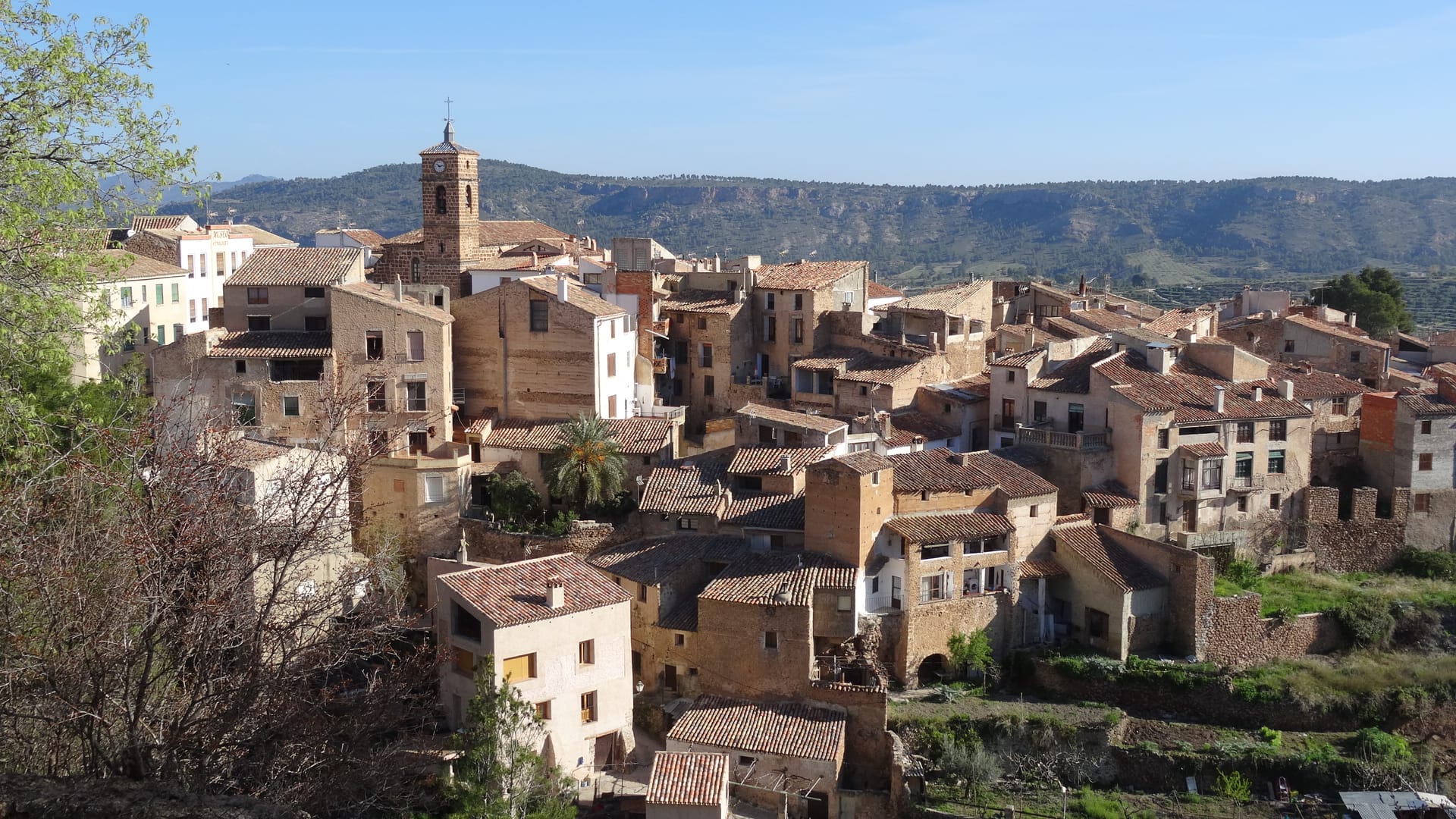
Located south of the riverbed of the Segura River, to which it joins through the stream bearing the same name, the town of Letur was already considered in the 16th century as “cheerful and rich in water and freshness”. A walk through its streets, the contemplation of its numerous fountains, or a visit to its surroundings, allow us to verify that now, almost five centuries later, the town preserves those same characteristics.

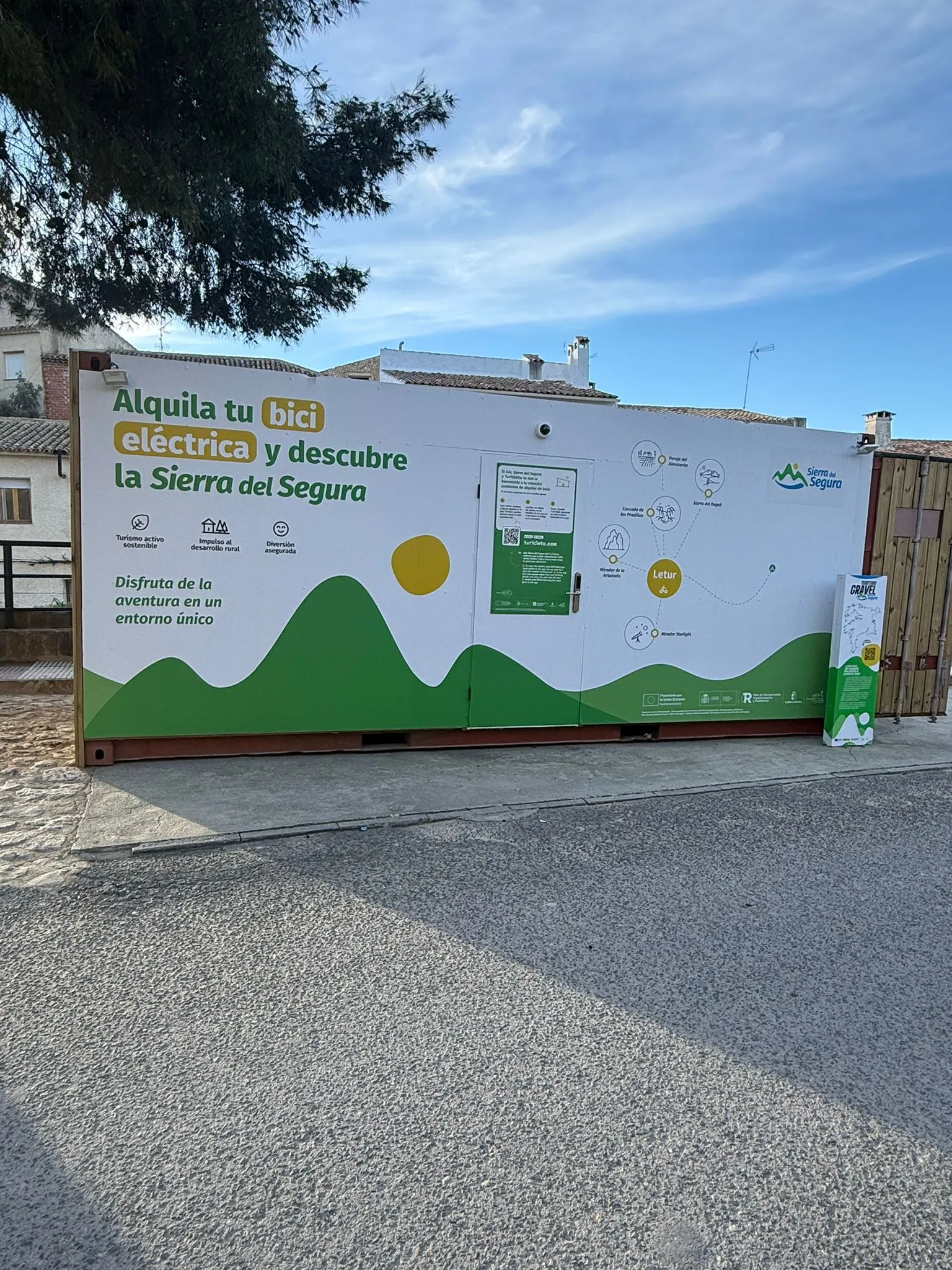
5 Cycling Routes
1 station available
Where do you want to rent your bike?

Stations inLetur

Find electric bike stations available in the city.

View all

Sobre Letur

<p><strong>Heritage</strong></p>

The town is settled on a rocky crag, an elevation of the terrain; however, the population also established itself outside these natural limits, forming the neighborhoods of Era del Rosal, San Antón and Las Eras. The entire old town preserves an Arab-medieval layout made up of narrow streets with sections that constantly change direction and finally converge through a main street, looping around the old quarter to flow into the square.

The Moorish character of its urban fabric has favored its declaration as a Historic-Artistic Monument, constituting the most important and best-preserved Muslim ensemble in the province of Albacete. It is a labyrinthine road network that is necessarily pedestrian. Buildings are generally two or three stories high. On their façades, the stone arches of the entrances stand out, sometimes forming the famous “portalicos”, since within some arches there were semi-interior portals that acted as collectors for several dwellings that shared them.

The layout of Letur presents a compact design. All streets and alleys concentrate around the Plaza Mayor, the historic center where the most emblematic building of the locality rises, the Church of St. Mary of the Assumption from the 16th century. Its general style is Gothic, although its doorway is Renaissance. It is a single-nave church divided into three sections, externally reinforced by rectangular-section buttresses with an intermediate step. There are four side chapels and the baptistery chapel with a 16th-century (Renaissance) baptismal font. Next to the church is the Town Hall, built in the 16th century. Not far from there, on one of the streets, medieval paintings can be found, unique in the province of Albacete.

A leisurely walk through the streets of Letur, such as Calle del Arco, Calle de los Cárabos, Calle del Atún or Calle del Albayacín, allows enjoyment of countless arches and small portals of singular beauty. We highlight the stone Arch of Las Moreras, a natural monument, and the Arch of the Puerta del Sol, the former entrance to the town dating from the 12th century. Due to its elevated position, Letur has magnificent viewpoints such as the Molatica Viewpoint, the Molinos Viewpoint, the San Sebastián Street Viewpoint, the Llanico Perales Street Viewpoint and the Artezuela Viewpoint.

<p><strong>Fauna and Flora</strong></p>

When referring to the natural resources of Letur, we must first focus on its carefully maintained orchard, which can be appreciated through a perimeter path of cement and stone traced over an old mule path that surrounds the rocky crag on which the village is located.

This route is divided into three sections: Cantalares, Molatica and Llanico. Along the way we encounter different caves, fountains and rest areas, highlighting Charco Pataco, which is formed by the passage of the Letur stream and is a place of great beauty with abundant vegetation. Here the stream increases its flow with a spring that emerges from the depths.

If we are lovers of botany, we can appreciate the singularity of two trees: one of the largest pines in the province and the tallest juniper. To find them, we must travel to the hamlet of Fuente la Sabina and from there walk 6 km along an unpaved road that will take us to Umbría del Nevazo, where both trees are located.

The pine is a Maritime Pine or Resin Pine (Pinus pinaster), located on a hillside with arboreal vegetation where, in addition to pines, holm oaks and shrub vegetation are found. It stands several meters above the rest of the trees due to its height (18 m). It has an enormous crown, very open, through which its complex branching structure can be seen. It has a straight trunk from which horizontal branches emerge. It is frequently visited by squirrels.

Very close to this pine is the White Juniper – Juniperus thurifera, in a wooded area where small holm oaks or scrub oaks, black pines and abundant Mediterranean shrub vegetation coexist. It measures 16 m and has two thick trunks emerging from the base that branch out in multiple forms. The crown is irregular and wider at the top. It has several holes made by woodpeckers to install their nests.

Approximately 3 km from Fuente de la Sabina is the Forest Nursery called “Las Rejas”, which in addition to being used as a nursery and warehouse, also serves for fumigation, fire prevention and extinction, and has a runway for aircraft.

Regarding the predominant vegetation, we highlight Esparto grasslands and pastures, Pines, Scrub oaks, Lentisk, White Juniper, Rockrose, Rosemary and Thyme.

As for fauna, we can observe species such as Fox, Badger, Hare, Rabbit, Squirrel and Wildcat.

<p><strong>Festivities</strong></p>

  • San Antón Festivities: January 17
  • San Juan Bonfires: June 24
  • Virgin of Carmen: July 16
  • Encierros – Festivities of the Virgin of the Assumption: August 14 to 20