
Turicleta
Rubielos de Mora
Featured Destination

Rubielos de Mora

Teruel
Cómo llegar

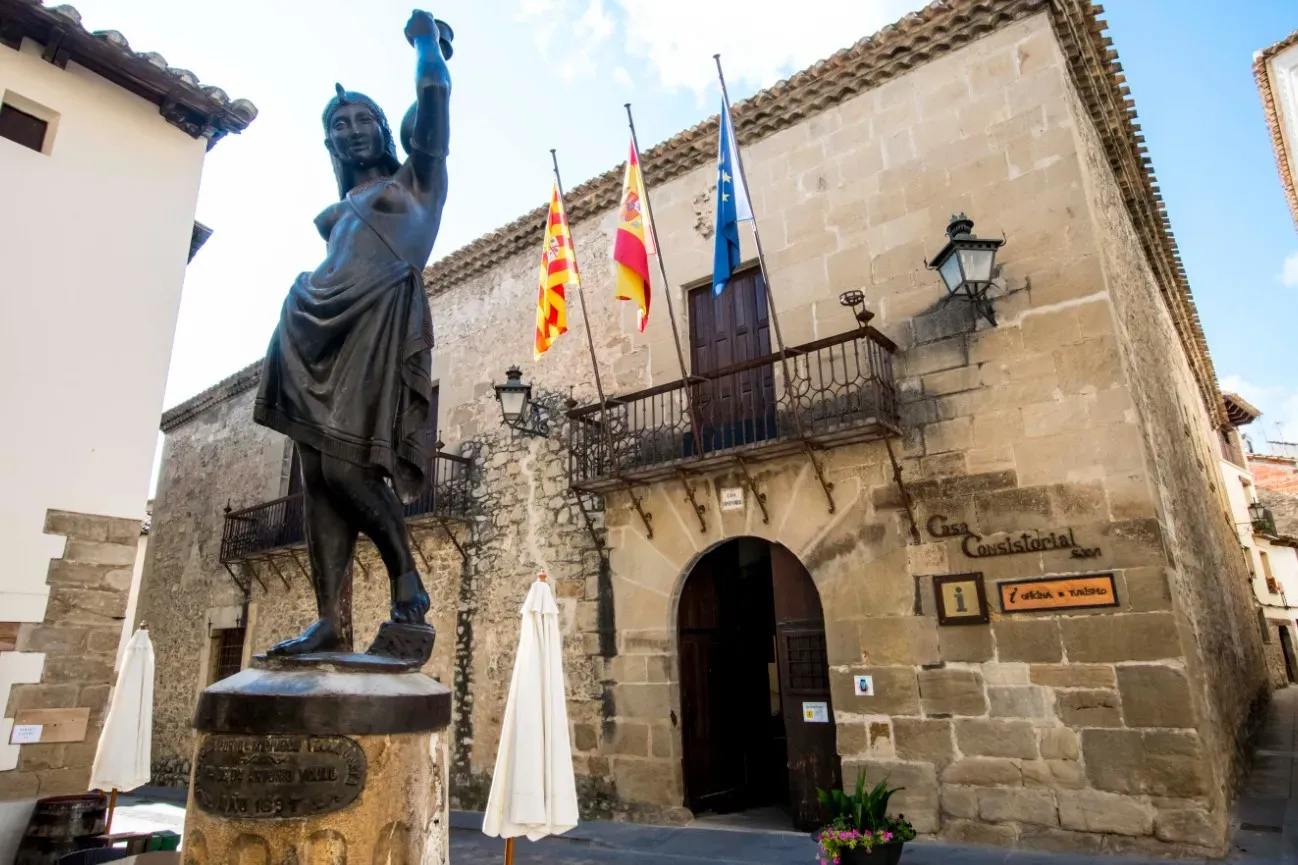
In present-day Rubielos, you can read the living history that has pulsed for centuries within its old town. You soon understand that this place did not go unnoticed, and its cobbled streets breathe a medieval air through the stone slabs that define and embrace the city.

6 Cycling Routes
0 stations available

Sobre Rubielos de Mora

<p><strong>Heritage</strong></p>

From the wall that once protected the town, two gate towers are preserved: San Antonio Gate, in Gothic style, and El Carmen Gate.

The Church of the Augustinian Convent, built in the 14th century, was the original parish church. Attached to its apse, the Convent of Saint Ignatius of Loyola was founded in 1624.

The Church of Santa María la Mayor, the current parish church, dates from the early 17th century.

The Hospice, built in 1749, features masonry work with a single nave and side chapels interconnected with one another. This building, together with the Convent of the Discalced Carmelites, forms today’s Salvador Victoria Museum.

Among the civil buildings, the Town Hall stands out for its exceptional architecture, particularly its splendid loggia, which still preserves parts of the original paving.

The historic centre, carefully preserved and awarded the Europa Nostra Prize, maintains a medieval layout full of stately houses.

Highlights include the Palace of the Villasegura family, the House of the Barberanes, and the Palace of the Counts of Creixell, all from the 18th century, as well as the House of the Marquises of Tosos and Counts of Samitier.

Other remarkable mansions line its streets, such as the House of the Lions, Báguena, Cebrián Corbatón, Lloret, Igual-Padilla, and Mesón houses.

<p><strong>Festivities</strong></p>

  • Winter: Begins with Saint Anthony (17 January), patron of animals, celebrated with bonfires and auctions.
  • Spring: Continues with Saint Michael (early May), a countryside pilgrimage, and Saint John (June), focused on the “quintos” and the traditional pine planting.
  • Summer: Includes Our Lady of Mount Carmel (16 July), the patron saint, with bullfighting events, and the Medieval Weekend (late August), with historical re-enactments.
  • Autumn: Features the Patron Saint Festivities of the Holy Cross (mid-September), the most important celebration, and El Pilar (12 October).

<p><strong>Gastronomy</strong></p>

The gastronomy of Rubielos and the Gúdar-Javalambre region is based on the tasting of its typical local products.

The most outstanding are Teruel D.O. Ham and Black Truffle (Tuber melanosporum), both renowned for their exceptional quality.

In addition, local wines, craft beers, jams, and honey are produced.

Traditional dishes include migas, stews, ternasco (young lamb), and, in autumn, saffron milk caps (wild mushrooms).

The experience is completed with traditional pastries and flatbreads baked in wood-fired ovens.