



<p><strong>Heritage</strong></p>
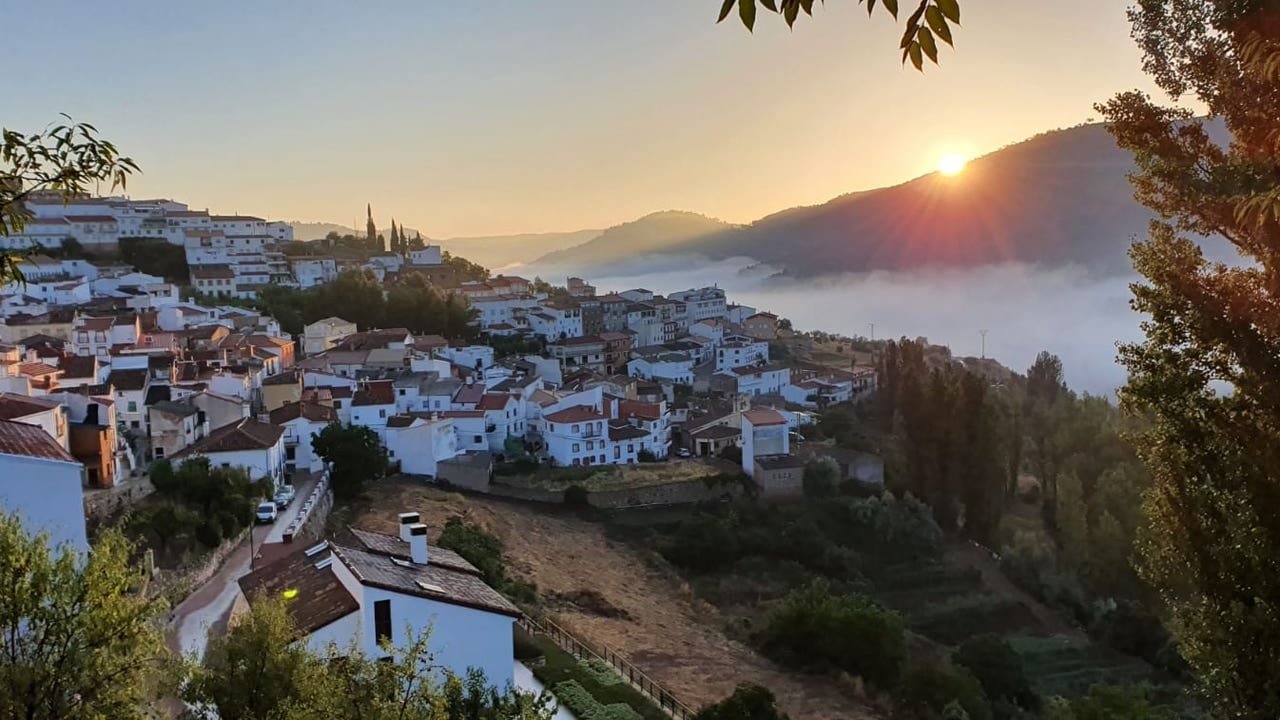
As you wander through the streets of Paterna, you will find a welcoming, simple town, with a small old quarter of steep, narrow streets. Its architecture, without large buildings, stands out for its simplicity and a certain harmony as a whole, without major architectural extravagances. In addition, your eyes will be delighted every time you look towards its mountains, where the true essence of this land lies.
We can visit some spots within our municipal area that stand out for their beauty. In this area, every corner will please the eye thanks to its terrain and the abundant variety of fauna and flora. Below, we highlight some places of singular beauty:
El Chorreaero
- Accessible from the junction on the road connecting Riópar and Alcaraz. It is a waterfall surrounded by abundant and varied vegetation, which in some winters freezes and forms a spectacular ice horsetail.
Fuente Lisa
- This is a group of springs, near the hamlet of Río Madera, that pour their crystal-clear waters into the Madera River. They form a recreational area that can be reached via the road connecting Batán del Puerto with Corral de Navarro.
Tejo Viejo
- This is a very rare species, over a thousand years old. It can be reached from the junction on the road from Riópar to Alcaraz, passing by places such as El Chorreaero or La Juanfría and turning off at La Lagunilla towards Torca Raya.
Cueva de la Osera
- Located in a karst formation with abundant sinkholes, in the area known as Calar de la Osera, near the abandoned hamlet of El Encebrico. There is a spring here where the legend begins of the bear who kidnapped a young woman and lived with her in the Cueva de la Osera. It is easily accessible from the junction on the road from Riópar to Alcaraz. Once past El Chorreaero, at La Juanfría we turn left, continuing along a forest track until reaching Collado de los Arros, where we take the path leading to the cave.
Pino del Toril
- Located on the boundary between Paterna del Madera and Molinicos, in the Cuerda de los Gallineros. Its size is spectacular. It can be reached from the Toril area. To do so, on the road connecting Riópar and Alcaraz, we cross the river and climb up to La Peguera, where we take the Cañada del Provencio trail.
Fuente de los Bandoleros
- Located behind Paterna, in the stream of Casa Segura. It can be accessed via the Peñascosa path. This is a rugged spot and a resting area, with waters of great purity.
Pico de la Almenara
- It reaches almost 1,800 meters in altitude. It stands out for its easy access and for the impressive views from its summit: to the south, Cazorla, El Calar and the source of the Mundo River; to the east, the Sierra del Segura; to the north, the fields of Albacete; and to the west, the whole of La Mancha. On its slopes is the Fuente de los Muchachos, where cooling off is a pleasure. You can reach it from the road connecting Riópar and Alcaraz, or via Las Espineras, or from the Paterna junction by El Chorreaero, turning right at La Juanfría and, after passing La Lagunilla, following the forest track on the right that leads to the foot of Almenara mountain.
Río Endrinales
- It rises near Almenara and runs parallel to the road from Riópar to Alcaraz, through the Sierra del Agua valley to Batán del Puerto, where, upon joining the Río de las Hoyas, it forms the Madera River. Its entire course is dotted with springs and extraordinary vegetation. In its clear waters we can see the native common trout, the native river crab, and even the occasional otter. In the section from Batán del Puerto to the houses of Sierra del Agua, we can enjoy a series of natural waterfalls that delight the eyes.