
<p><strong>Heritage</strong></p>
Natural heritage
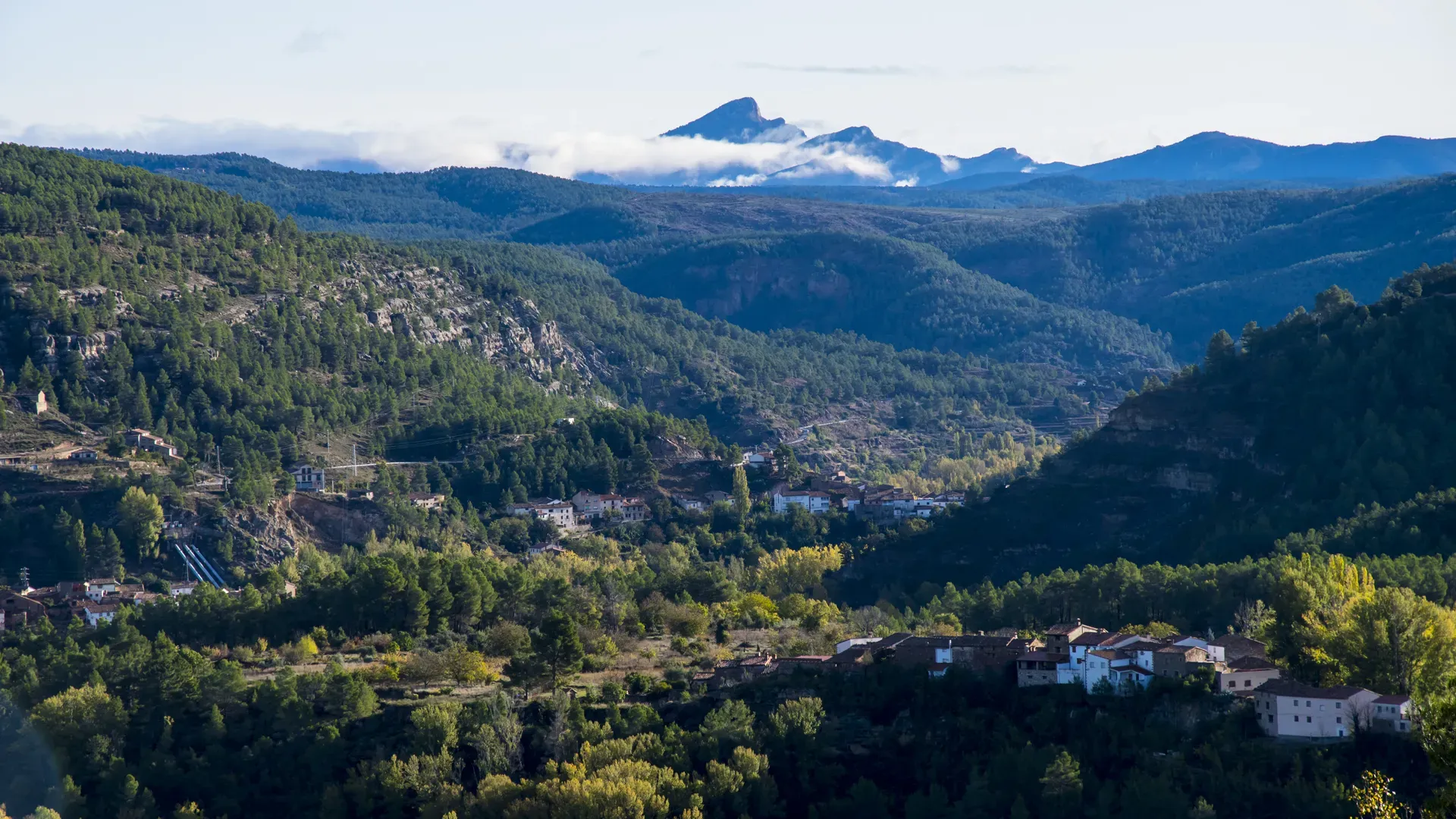
Olba stands out for its natural environment in the valley of the Mijares River, where riverbank forests, orchards, and pine woods blend together. The river offers beautiful landscapes, swimming spots, and good fishing. It can be explored along the PR VT-126 trail, which connects Montanejos and Rubielos de Mora.
Highlights include:
- Fountain of Health, with remains of an old aqueduct.
- Santa María Quarries, with the impressive canyons of the Rubielos River.
- Morrón de San Pedro, with panoramic views of the valley.
The municipality covers a great diversity of flora and fauna depending on altitude: riverside vegetation, orchards with fruit trees, and mountain forests with pines and holm oaks, where mountain goats, wild boars, and rabbits live. Aromatic plants abound, as well as mushrooms (some toxic, so caution is advised).
Cultural heritage
Although few remains prior to the Middle Ages survive, Olba preserves a valuable heritage linked to its Arab and Christian history, as well as its agricultural and industrial past.
Notable elements include:
- Town Hall (17th c.): traditional building with arched portico, recently restored.
- Church of Saint Catherine (17th c.): baroque temple with Jesuit layout, rich interior decoration, neoclassical altarpieces, and a historical mausoleum.
Chapels:
- Saint Roch (18th c.): simple popular construction with groin vault.
- Saint Peter: located on the mountain, a place of pilgrimage and festive tradition.
- Virgin of the Forsaken: semi-ruined, testimony of depopulation.
- Carlos IV Bridge (1803): major civil engineering work of its time, financed by many towns and partially destroyed in the Civil War.
- Civil War Trenches: located near Saint Peter’s hermitage, well preserved and open to visitors.
Former industrial activity:
- Wool factory: important workplace until the 1950s.
- Cement factory: prominent production until closure in the 1990s.
- Hydroelectric plants: historic use of the Mijares River.
- Olba Mill (17th c.): one of the best-known mills in the region, now restored as a rural hostel.